Salons and spas · · 6 min read
Can AI run my salon's bookings and reminders? Six uses, honestly
Salon owners are being sold AI for calls, reminders and rebooking. Six uses, what they cost, and why most of the evidence still comes from the vendors.
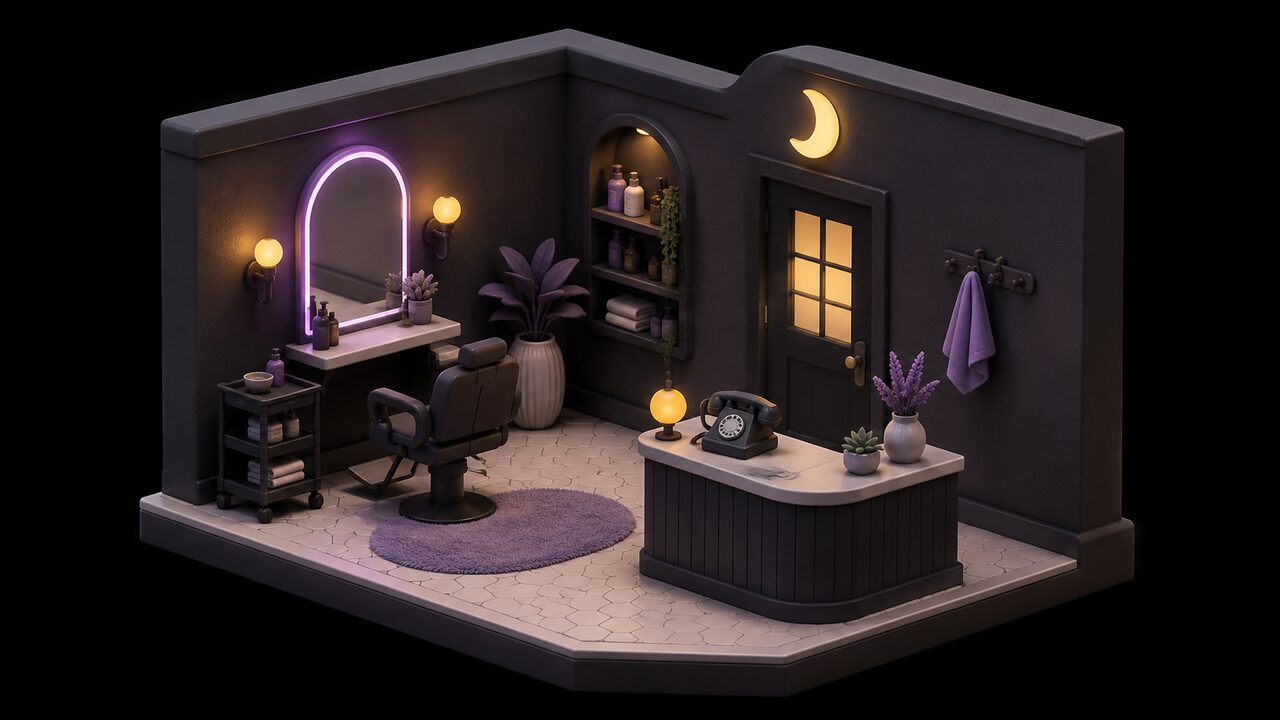
You are mid-colour with foil in your hands when the salon phone rings. You cannot answer it. The caller does not leave a message. They try the next salon on the list.
That small leak is what most AI tools for salons are aimed at. Before we go through them, a warning about the evidence: nearly everything published about AI in salons comes from companies that sell salon software. We found no independent survey of salon owners and no named salon that has reported its own before-and-after numbers. So this list says what the tools do, what they are said to cost, and where the claims are only claims.
How we chose: we kept the uses that show up across more than one vendor's material and that a one- to five-chair salon could try without a technical person on staff.
1. An after-hours phone and message assistant
The verdict: the most useful idea on the list, and the hardest one to judge.
An AI receptionist answers the phone or the website chat when nobody can. According to Boulevard, its own assistant answers calls, sends clients to online booking or a reschedule link, and hands personal questions to staff. It also leaves a note if the client does not follow through.

Boulevard puts standalone AI receptionist tools at about $49 to $299 a month, depending on call volume and features. It does not name the currency, so confirm the price on the tool's own page before you plan around it.
The demand side has a number. In a Zenoti survey of 1,011 Americans, fielded in September 2025, 71% of salon and spa regulars said they had skipped booking because it was too hard to reach someone or to use the online system. And 55% said they were comfortable interacting with an AI receptionist.
Two cautions. Zenoti sells AI receptionists, and the sample is American, not Canadian. Both facts matter when you read the result.
2. Answering the same five questions
The verdict: low risk, quick to set up, small but real.
Most salon messages are variations of the same few questions: prices, whether a stylist does a certain service, parking, how to reschedule. An AI assistant can answer those from your own written answers and pass anything else to you.
The rule that keeps this safe is simple. Give it a short list of facts you have checked, and tell it to say "I will ask the team" for anything outside that list. Do not let it quote prices you have not typed in yourself.
Boulevard's own article admits that clients accept AI more readily for low-stakes tasks such as booking than for anything closer to the service itself. That matches common sense. A client will let a program tell them your Saturday hours. They will not want it recommending a colour correction.
3. Filling the gap when someone cancels
The verdict: one of the few uses where the benefit is easy to measure.
An empty chair at 2 p.m. earns nothing. A waitlist tool contacts clients who asked for an earlier slot when one opens, and updates the calendar once somebody accepts. Boulevard describes this as an AI waitlist feature.
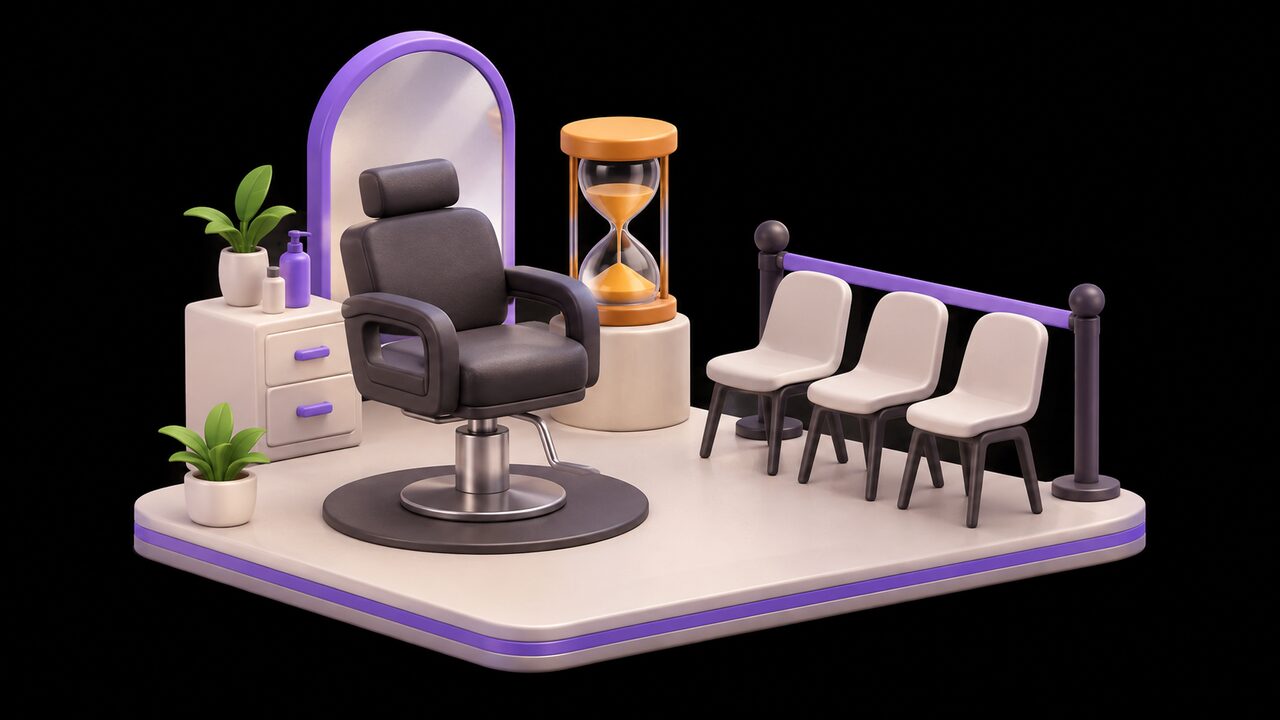
You can check whether it works in one month. Count the cancelled slots that were refilled before the tool and after it. If the number does not move, cancel the subscription.
Most booking systems already have a basic waitlist. Ask your current provider before you buy a second tool.
4. Reminders that reduce no-shows
The verdict: worth doing, but not new, and the headline numbers are soft.
Automated reminders and simpler rescheduling are the oldest idea here. Boulevard says organizations often report no-show reductions of roughly 30 to 50% after automated reminders. It gives no source for that range, so treat it as a sales estimate, not a result you will get.
In Canada the reminder itself has a legal edge. Anti-spam law (CASL) covers commercial electronic messages, and the CRTC's implied consent guidance lets you rely on an existing business relationship for a limited time. Practically:
- Keep reminders to the appointment: date, time, address, how to change it.
- Say who the message is from.
- Do not slip a promotion into a reminder.
- Keep a record of when the client last booked.
If you want to text offers as well, get a lawyer's view first. We are not lawyers, and the rules around promotional texts are stricter than for reminders.
5. Drafting the marketing you never get to
The verdict: a good first draft, never a finished post.
Generative AI can draft campaign copy, social posts, post-visit follow-ups and rebooking messages. Boulevard says staff then edit them, and its article admits the drafts need revising to fit the salon's voice.
That is the right way to use it. Ask for three versions of a short caption, pick one, and change it until it sounds like the person who runs the salon. Always check the facts: a draft that promises "20% off all colour" is a promise you now have to keep.
The same CASL rules apply as in item 4, and more so. A marketing message needs consent, your identity and a working unsubscribe link.
6. Spotting the clients who have quietly stopped coming
The verdict: promising on paper, and only useful if you act on it.
Some booking tools flag clients who have stopped returning, or trigger a birthday offer. Boulevard lists loyalty automations and "winback" campaigns among its AI features. Another tool might suggest a service based on past visits.
The software can only list who has gone quiet. A person still has to decide whether to send a message, and what it says. If you already know your regulars by name, you will not learn much from a list. A larger salon with several stylists and thousands of client records gets more from it.
How they compare
| Use | Time to set up | What it can do | The catch |
|---|---|---|---|
| After-hours assistant | Hours | Answers calls and chats | Vendor numbers only; about $49 to $299 a month |
| Common questions | An afternoon | Answers from your own facts | Wrong answers if your facts are stale |
| Cancellation waitlist | Often built in | Refills freed slots | Check your booking system first |
| Reminders | Often built in | Cuts no-shows | The 30 to 50% figure has no source |
| Marketing drafts | Minutes | First drafts | Needs editing; needs CASL consent |
| Lapsed-client flags | Often built in | Lists who went quiet | A person must act on it |
What the national numbers say
Salon owners are not far behind or ahead of other small businesses. Statistics Canada reports that 19.2% of Canadian businesses used AI in the 12 months to the second quarter of 2026, up from 12.2% a year earlier. It does not publish a figure for hair and beauty services on that page, so we cannot tell you how many Canadian salons are using it.
Where to start
- Count your missed calls for one week. If it is two or three, a better voicemail message may be enough.
- Ask your current booking provider what AI features are already included before you add a new tool.
- Pick one use, run it for a month and measure one number: refilled slots, no-shows or booked calls.
If you want a second opinion on which of these fits your salon, you can book a call with Trimotech.
Sources
- 2025 Survey infographics: What salon and spa clients want for 2026, AI and appointment booking trendsZenoti, September 12, 2025
- AI in the beauty industryBoulevard, August 12, 2026
- Analysis on artificial intelligence use by businesses in Canada, second quarter of 2026Statistics Canada, June 11, 2026
- From Canada's Anti-Spam Legislation (CASL) Guidance on Implied ConsentCRTC
Questions
- Will clients accept an AI answering the salon phone?
- A 2025 Zenoti survey of 1,011 Americans found 55% were comfortable interacting with an AI receptionist. That is a vendor survey from the United States, so test it on your own clients before you rely on it.
- Do appointment reminder texts need consent in Canada?
- Anti-spam law (CASL) is about commercial messages, and the CRTC treats an existing business relationship as implied consent for a limited time. Keep reminders to the appointment details, identify your salon, and ask a lawyer about anything promotional.
- How much does an AI receptionist for a salon cost?
- Boulevard, a salon software vendor, puts standalone AI receptionist tools at about $49 to $299 a month, depending on call volume and features. It does not name the currency, so check the price on the tool's own page.
Read next
-
E-commerce · · 7 min read
Can AI handle my online store's descriptions, support and returns?
Small online shops use AI to write listings, answer where-is-my-order emails and start returns. What each job costs, what one brand got, and what to keep.
-
AI news, October 12 · · 7 min read
This week in AI: GPT-6, a cheaper Haiku and call recording rules
ChatGPT moved to GPT-6, Anthropic cut the price of its small model by up to 90%, and Canada's privacy watchdog updated its rules for recording customer calls.
-
Online reviews · · 7 min read
How to reply to Google reviews with AI, and when not to
Customers expect a reply to every review, and fast. How to let AI draft the routine ones, check each one before it posts, and which to answer yourself.